If some protection is good, more must be better, right? Not always. Full body coverage protects more of the car, but it also costs more, takes much longer to install and covers panels that, for many drivers, rarely get damaged. So where does the money do the most?
What full front covers
A full-front package covers the panels that face the road: the full hood, the full front fenders, the front bumper, the headlights and the mirror caps. KitCutz Gold also includes door edge guards. These panels take direct hits from stones, gravel and bugs every time you drive.
What full body adds
Extended-body coverage builds on full front and brings in more of the side and rear of the car: doors, rocker panels, rear quarter panels, the rear bumper, the trunk or tailgate and the roof, depending on the vehicle. These panels see a different kind of damage. Fewer high-speed stone hits, more scuffs, salt and sandblasting, door dings and loading marks.
Where damage actually happens
On most cars, the overwhelming majority of chips are on the front: the bumper, the front of the hood, the fenders and the mirrors. That’s simple physics. Those surfaces face forward into whatever the car ahead kicks up.
The rest of the car isn’t immune, though. Rocker panels and lower doors get sandblasted by your own tires, especially in winter. The rear bumper takes scuffs from loading. Door edges hit garage walls and parking-lot pillars. Whether those matter enough to cover depends on how and where you drive.
Side by side
| Compared | Full front (Gold) | Full body (Platinum) |
|---|---|---|
| Panels | Hood, fenders, front bumper, headlights, mirrors, door edges | Everything in Gold plus doors, rockers, rear bumper, trunk or tailgate, roof and quarters |
| Main protection | Stone chips and road debris | Chips plus scuffs, salt sandblasting and everyday contact |
| KitCutz starting price | $699 CAD | $1,799 CAD |
| DIY install time | Usually a weekend for a first-timer | Several days, often spread over a few weekends |
| Difficulty | Moderate. The bumper is the hardest piece | Higher. Large panels and more curves |
| Best for | Most daily drivers and highway commuters | Long-term owners and harder conditions |
And where partial front fits in
There’s also a third option: partial front, our Silver kit. It covers the front of the hood and fenders, the front bumper, the headlights and the mirrors, which are the first spots to chip. It costs less than full front and is the easiest of the three to install. The trade-off is a film edge partway across the hood.
For city drivers who only occasionally take the highway, or for anyone protecting a car on a tight budget, partial front can be exactly enough. See all three side by side on the coverage page.
Who should choose full front
- You commute on the highway and want to stop chips where they happen
- You want the whole hood covered with no film line, without paying for the whole car
- It’s your first install and you want a job you can finish in a weekend
- You plan to keep the car a few years but aren’t keeping it forever
Who should choose full body
- You plan to keep the car for many years and want the original paint on every panel
- You drive gravel roads or long salt seasons that sandblast the lower sides
- You park in tight spots, garages or busy lots where doors and quarters get scuffed
- The car is new, high-value or has paint that’s expensive to match
- You’re comfortable taking on a bigger install, or you’ve done a smaller one before
The in-between option
Plenty of owners start with full front, see how they like the install and the result, and then think about more coverage later. The front is where most of the damage happens, so it’s a sensible first step. If you already know you want the whole car protected, though, starting with full body means everything is covered while the paint is still perfect.
If you’re torn, tell us which panels worry you most when you request your kit, and we’ll tell you what’s available for your exact car.
Don’t forget installation effort
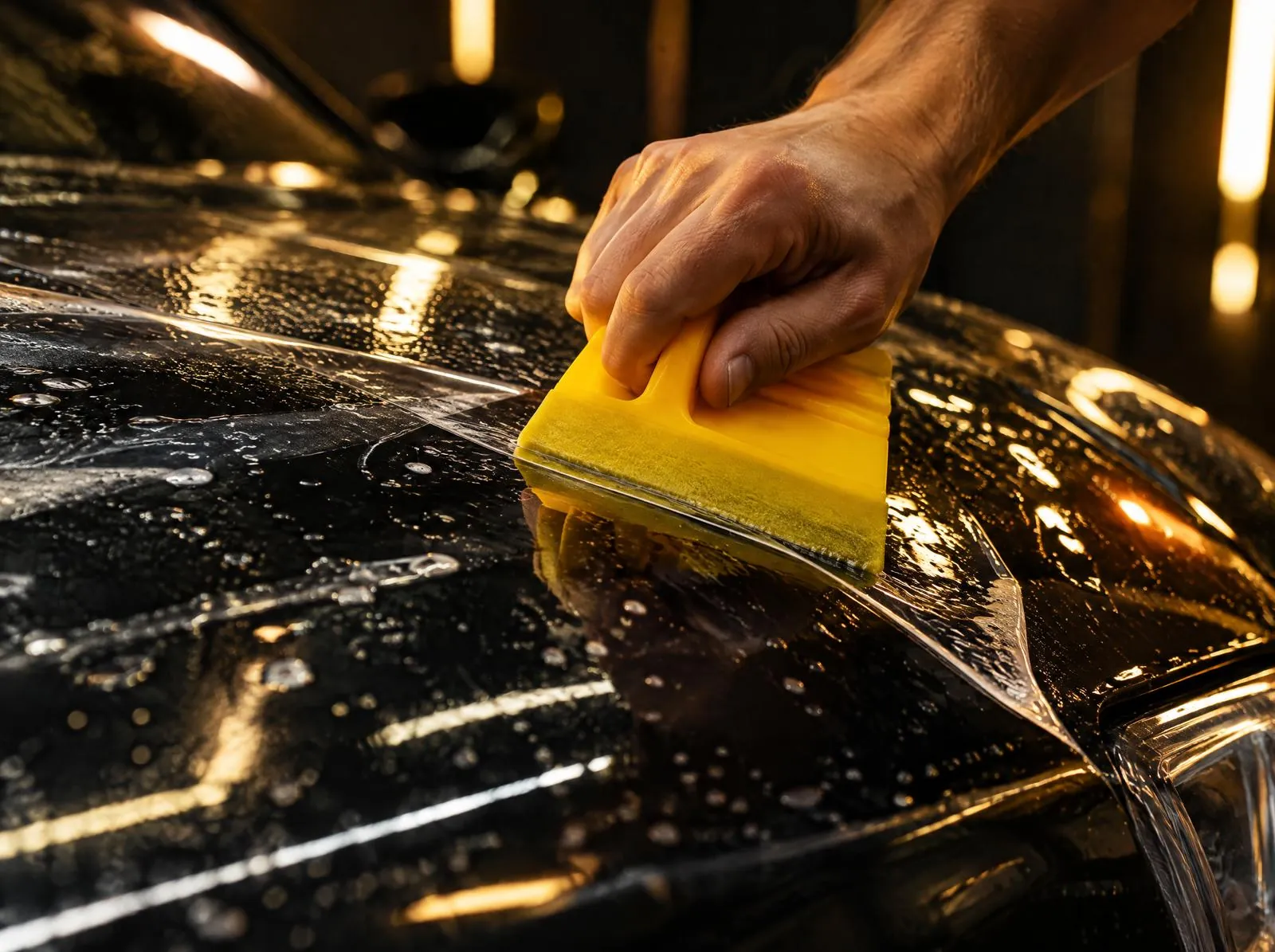
Full body isn’t just more film, it’s much more time on your feet with a squeegee. Large panels like doors and roofs go much easier with a helper. Most people find their technique gets a lot better after the first few pieces, so if you do go full body, start with the smaller front pieces and leave the big sides for later. Our prep guide and mistakes to avoid are worth reading either way.
How film ages on different panels
Film on the front bumper and the front of the hood works hardest. It absorbs thousands of impacts and is usually the first to show wear after several years. Film on doors, roofs and rear panels sees far fewer impacts and often looks good for longer. That matters for two reasons. First, the front is where your money does the most work. Second, if you go full body, the pieces most likely to need replacing someday are the same front pieces a full-front kit covers, and those are easy to replace individually.
A quick way to decide
- Mostly city driving and a tight budget? Partial front.
- Regular highway driving, or you want the whole hood covered? Full front.
- Keeping the car a long time, with gravel, heavy salt or tight parking? Full body.
- Still unsure? Start with full front. You can always add more later.
Budget for what matters
Look at the panel list, not the package name. Final quotes vary with body size, trim and what’s confirmed at fitment. Then ask yourself honestly where your current or last car got damaged. That answer usually points to the right package.
Choose without pressure
The right package is the one that matches your car, your driving, your skills and your budget, not automatically the biggest kit. Compare the packages side by side on the coverage page.
Quick answers
Is full body PPF worth it over full front?
For long-term owners and cars that see gravel, salt or tight parking, often yes. For most daily drivers, full front covers the panels that take most of the damage.
How long does it take to install full body PPF yourself?
Usually several days for a first-timer, often spread over a few weekends. Full front is typically a weekend job.
Can I add more PPF coverage later?
Yes. Many owners start with the front and add other panels later. Ask about what’s available for your exact vehicle.
Find the right kit for your Tesla
Every KitCutz kit is pre-cut for your exact year and trim, and fitment is verified before you pay. Silver starts at $499 CAD, Gold at $699 and Platinum at $1,799.
Weighing up DIY kits? See how KitCutz compares.